
Combined or Dual Training Programs:
Pursuing a DVM/PhD or a VMD/PhD is a significant undertaking, and it can be challenging to figure out where to begin.
Different programs have their unique advantages and limitations – they can vary by how they integrate clinical and research training, how many years the program lasts, and what kind of tuition assistance or financial support is available. This page is designed to serve as a starting point to help prospective students explore different programs and determine which may best suit their needs and career goals. Here you will find introductory information about US-based DVM/PhD and VMD/PhD programs, training timelines, and financial support.
Please note that while we strive to keep this information as up-to-date as possible, your most accurate sources will be the institutions themselves listed below.
-
Learn more about Auburn’s Dual DVM/PhD program here.
-
Learn more about CSU’s Combined DVM/PhD program here.
-
Learn more about Cornell’s Combined DVM/PhD program here.
-
Click here to learn more about the Veterinary Scientist Training Program (VSTP), a DVM/PhD dual degree program at UC Davis.
-
Click here to learn more about the Veterinary Medical Scientist Training Program (VMSTP), a DVM/PhD dual degree program at the University of Georgia.
-
Click here to learn more about the Vet Med Scholars Program (VMSP), a combined DVM/PhD program at the University of Illinois Urbana-Champaign.
-
Learn more about the concurrent DVM/PhD program at Iowa State here.
-
Learn more about the concurrent DVM/PhD program at Kansas State here.
-
Learn more about the Dual Track DVM/PhD program at Louisiana State here.
-
Learn more about dual DVM/PhD training at Michigan State here.
-
Learn more about Minnesota’s combined DVM/PhD program here.
-
Learn more about the DVM-PhD Dual Degree at Mississippi State here.
-
Learn more about NC State’s Combined DVM/PhD program here.
-
Learn more about OSU’s DVM-PhD Program here.
-
Learn more about PennVet’s VMD-PhD Program here.
-
Learn more about Purdue’s DVM/PhD combined degree option here.
-
Learn more about Tennessee’s DVM-PhD dual degree program here.
-
While Tufts had a DVM/PhD program in the past, it is currently disbanded. You can learn more about their post-DVM PhD program here.
-
Learn more about Wisconsin’s DVM/PhD training program here.
Comparing timelines:
Most programs begin and end with veterinary preclinical and clinical training, respectively, with PhD training in between. Some programs combine both degrees sequentially. Others have more flexible options or individualized training plans determined by each student in conjunction with faculty. While a 4-year DVM is standard, PhD timelines are more variable across programs. Completion times for both degrees range from 7-9 years.
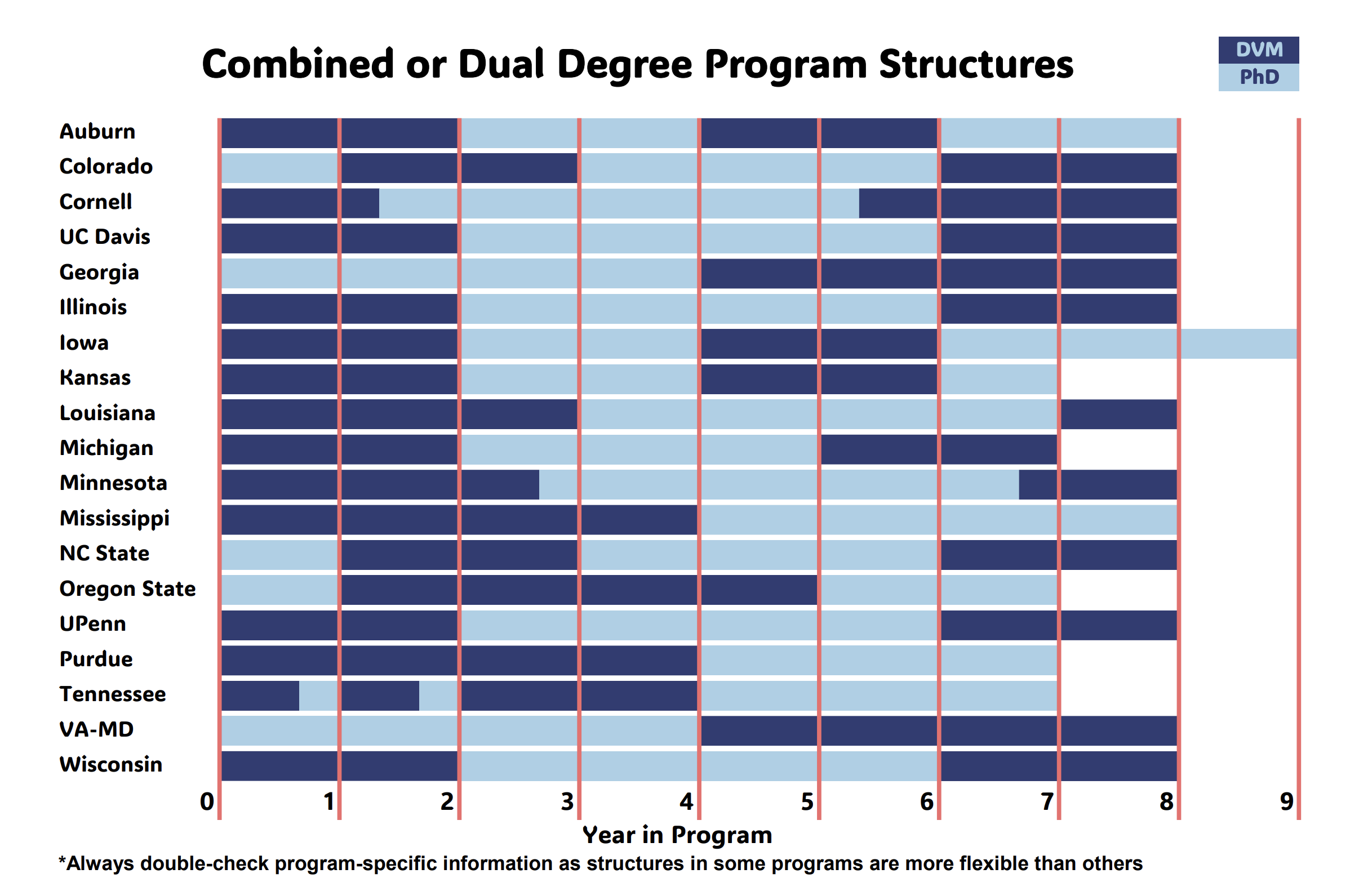
Note that the timelines illustrated here are meant to show rough outlines for each program and are not comprehensive. Please consult each program's website for more information.Financial support:
The cost of education, especially a veterinary education, can be a salient factor in your decision to pursue a DVM/PhD or VMD/PhD. Combined or dual training programs often offer support in the form of DVM tuition assistance. Some also offer a graduate student stipend and benefits (such as student health insurance). The amount of funding or support varies by program. For complete information, contact your school(s) of interest.
